MY FATHER AND QADDAFI




-
Winner: Best International Documentary Feature - Carmel International Film Festival, USA
Winner: Jury Prize - Matera International Film Festival, Italy
Winner: Best Documentary - Forward Film & Television Festival, UK
Winner: Outstanding Merit for Documentary Impact Achievement - Richmond International Film Festival, USA
Winner: Jury Prize for Best Documentary – Mizna's Twin Cities Arab Film Fest, USA
Winner: Best Editing – Topanga Film Festival, USA
Winner: Bronze Wreath of Megisti – Beyond Borders Kastellorizo International Documentary Festival, Greece
Winner: Best Documentary – Annaba Mediterranean Film Festival, Algeria
Winner: Excellence in Cinematic Expression – Hollywood Arab Film Festival, USA
Winner: Jury Prize – Malmö Arab Film Festival
Winner: Best Feature Documentary – Prague Film Festival, Czech Republic
Winner: Jury Prize – Marrakech International Film Festival, Morocco
Winner: Best Documentary – Doha Film Festival, Qatar
Winner: Audience Award – CinemaMed, Brussels, Belgium
Winner: Valentina Pedicini Award – MedFilm Festival Rome, Italy
Nominee: Golden Globes Impact Prize for Documentary by Artemis Rising Foundation – Biennale Venice International Film Festival, Italy
Nominee: Gold Hugo for Best Documentary – Chicago International Film Festival, USA
Honorable Mention: Jury Prize – É Tudo Verdade - It's All True - International Documentary Film Festival, São Paulo, Brazil
-
World Premiere: La Biennale di Venezia | Venice, Italy
Middle East Now | Florence, Italy
Fondazione Prada | Milan, Italy
Chicago International Film Festival | Chicago, U.S.A
Festival Dei Popoli | Florence, Italy
Arab Film Festival | San Francisco, U.S.A
MedFilm Rome | Rome, Italy
MENA Premiere: Doha Film Festival | Doha, Qatar
Cinema-MED | Brussels, Belgium
Marrakech International Film Festival | Marrakech, Morocco
Göteborg Film Festival | Göteborg, Sweden
The Doc Screenings International Documentary Film Festival | Tbilisi, Georgia
Human IDFF Oslo | Oslo, Norway
Luxembourg City Film Festival | Luxembourg
Los Angeles Italia | Los Angeles, U.S.A
One World International Human Rights Film Festival Prague | Czech Republic
CPH:DOX | Copenhagen, Denmark
Movies That Matter Film Festival | The Hague, The Netherlands
FIGRA | Douai, France
É Tudo Verdade - It's All True - International Doc Film Festival | São Paulo, Brazil
Malmö Arab Film Festival | Malmö, Sweden
Prague Film Festival | Czech Republic
Hollywood Arab Film Festival | Culver City, U.S.A
Hot Docs Festival | Toronto, Canada
Annaba Mediterranean Film Festival | Annaba, Algeria
San Diego Underground Film Festival | San Diego, U.S.A
New York African Film Festival | New York, U.S.A
Red Hook Brooklyn Film Festival | Brooklyn, U.S.A
Sydney Film Festival | Sydney, Australia
Encounters International Film Festival | Cape Town, South Africa
Cinema Akil Film Festival | Dubai, UAE
Dallas Independent Film Festival | Dallas, U.S.A
ArteEast and BAM | Brooklyn, U.S.A
ABQ Indie Film Fest | Albuquerque, U.S.A
Zanzibar International Film Festival | Zanzibar City, Zanzibar
Social World Film Festival | Vico Equense, Italy
Torino Film Festival | Torino, Italy
Galway Film Fleadh Selected Film | Galway, Ireland
Liverpool Arab Arts Festival | Liverpool, U.K
Whistleblower Summit and Film Festival | Washington D.C., U.S.A
Amman International Film Festival | Amman, Jordan
St. Moritz Art Film Festival | St. Moritz, Switzerland
Freedom Festival International | Columbia, U.S.A
Beyond Borders - Kastellorizo International Doc Festival | Pallini, Greece
Taiwan Human Rights Festival | Taipei, Taiwan
Topanga Film Festival | Topanga, U.S.A
Lycian Way International Film Festival | Antalya, Turkey
Caorle Independent Film Festival | Caorle, Italy
StoryLand International Film Festival | Murska Sobota, Slovenia
Écrans du réel | Beirut, Lebanon
She Speaks Film Festival | Austin, U.S.A
Retrospective of Marrakech Film Festival | Rabat, Morocco
Richmond International Film Festival | Richmond, U.S.A
Mizna's Twin Cities Arab Film Festival (TCAFF) | Minneapolis, U.S.A
Lunenburg Doc Fest | Lunenburg, Canada
Sofia Documental | Sofia, Bulgaria
Matera Film Festival | Matera, Italy
Forward Film & Television Festival | Digbeth, U.K
Carmel International Film Festival | Carmel, U.S.A
Arabisches Stuttgart Arab Film Festival | Stuttgart, Germany
Regards de Femmes | Hammamet, Tunisia
Terra di Siena Film Festival | Siena, Italy
-
Indiewire: 'My Father and Qaddafi’ Review: Libyan Filmmaker Jihan K Directs a Riveting Testimony to a Father Who Gave His Life to the Country’s Fight for Peace
The New York Times: A Director’s Quest for the Truth About Her Father’s Abduction
Awardswatch: ‘My Father and Qaddafi’ Review: Jihan K Crafts a Moving Portrait of Living Under a Regime of Brutality [A-] Venice
Variety: ‘My Father and Qaddafi’ Follows Jihan K’s Decades-Long Search for the Truth About Her Father’s Disappearance
Milleworld: Jihan K’s ‘My Father and Qaddafi’ Is a Patient Reconstruction of a Life Stolen by Dictatorship
Loud and Clear: My Father and Qaddafi: Film Review
Screen Daily: ‘My Father And Qaddafi’ review: Libyan filmmaker Jihan explores the 1993 abduction of her politician father
International Cinephile Association: Venice 2025 review: My Father and Qaddafi (Jihan K)
Gazettely: My Father and Qaddafi Review: A Filial Quest Through a Nation’s Past
Hollywood Hills Magazine: Jihan: Exclusive Interview with “My Father And Qaddafi” Director & Producer
-
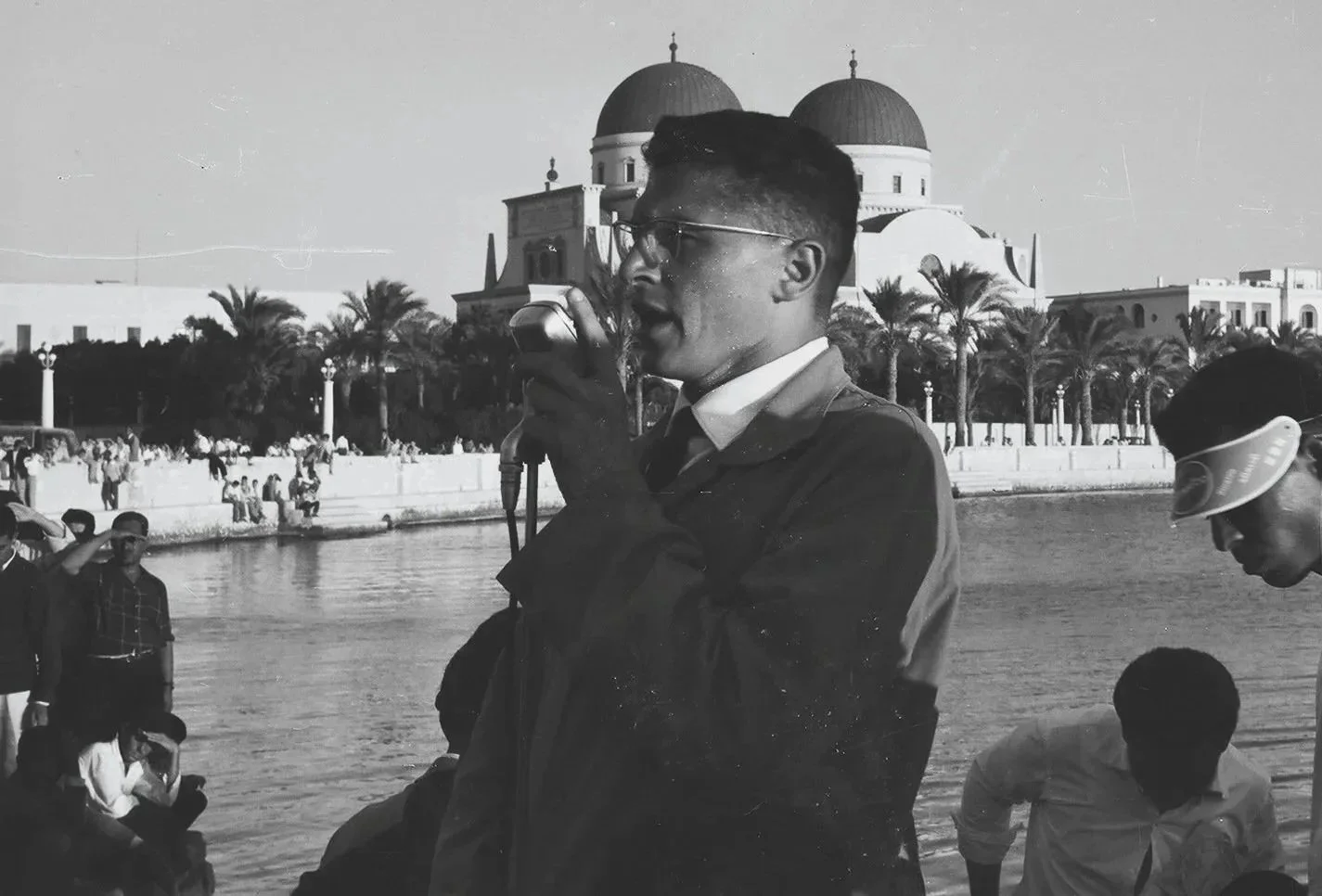
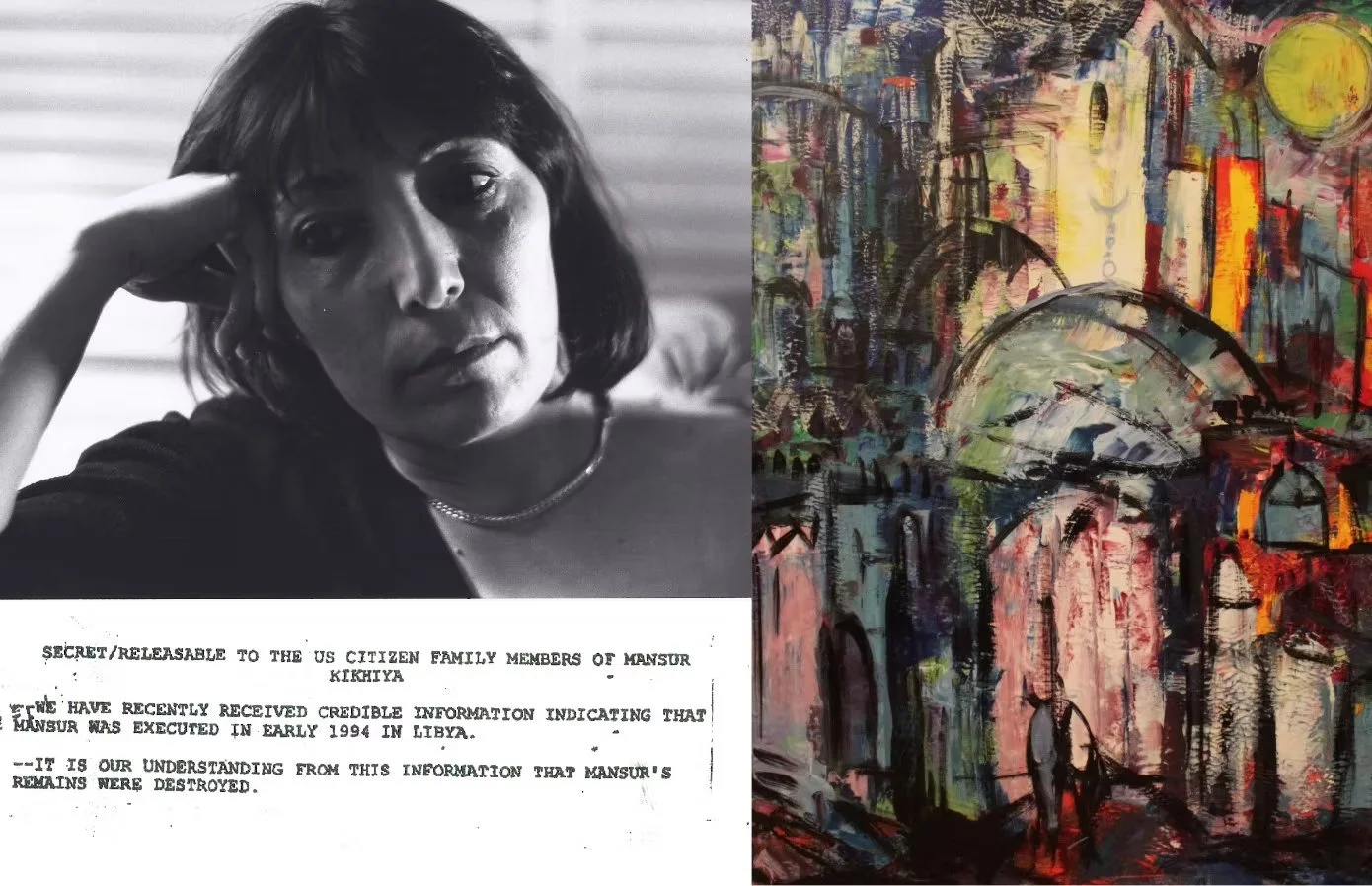
When Jihan was six years old, her father flew to Cairo and never returned. Mansur Rashid Kikhia was the Foreign Minister of Libya, ambassador to the United Nations, and a human rights lawyer. After serving in Qaddafi's increasingly brutal regime, he defected from the government and became the leader of the peaceful opposition. For many, Kikhia was a rising star who could have been the next leader of Libya, however, in 1993 he disappeared from his hotel in Egypt.
Jihan’s mother Baha Al Omary, a strong-willed Syrian-American artist, began searching for him, launching the family into an international political maze. Her mission to find justice brought her to the Libyan desert in the middle of the night, face to face with Qaddafi to negotiate her husband’s release. Yet it wasn’t until after the regime’s fall, 19 years later, that his body was found in a freezer near Qaddafi’s palace.
My Father and Qaddafi takes the audience on a raw and reflective journey as Jihan pieces together a father she barely remembers, while discovering the troubled history and politics of Libya. Her journey starts from fading personal memories, leading to encounters with family members, her father’s peers, and historical archive footage.
Hoping at first to uncover the truth, Jihan instead transforms the mystery into a curiosity that brings her closer to her father and her Libyan identity. She approaches politics not as a distant subject, but as a lived experience that penetrates into every human relationship - even between a little girl and her father.
-
I don’t want my father to disappear a second time. I feel an urgency to overcome my void in the midst of Libya’s relentless chaos and instability, which I fear will eventually bury my Libyan identity. In my documentary film, My Father and Qaddafi, I search through other people’s memories trying to create a clearer picture of my father who I don’t remember.
Making this documentary helps me understand the importance of a father figure and the impact of losing a father on a family, a community, and even a country. If my father was alive today, he would be 94 years old, sharing his untold story is also sharing an untold story of Libya, one that spans almost 100 years of Libyan history and politics. His legacy gives me unique access to my father’s generation, to Libyan former government officials and opposition members. These men take the opportunity to reflect honestly with me over our lost Libya and our future. I wish I could ask my father, how did we end up like this? And how is Libya going to break free from this cycle of trouble?
As I reconstruct my father’s portrait, I plant the seed for a deeper, more honest connection with him and to free my hidden voice. Instead of compartmentalizing my father as a one-dimensional hero from the past, I search for the man behind the myth and try to reintegrate him into my present life as a human being and a loving father. The wound of his disappearance begins to transform into new possibilities.
Since I was 6 years old, my mother told us the truth, and although this has tempered the shock, I still struggle with a constant surreal feeling. Despite my fragmented memories, my fears, and my cultural limitations in Libyan society, I am trying to overcome this surreal feeling and reconnect with my father and with Libya on my own terms, as an open hearted woman. This is one of the ways I am hoping to hold my father before he disappears completely from my memory and even potentially from Libya’s memory.
- Jihan
-
My Father and Qaddafi sheds light on Mansur Rashid Kikhia’s case and the thousands of other cases of enforced disappearance in Libya. The lack of closure is a nightmare for families of disappeared victims. Through Jihan’s personal lens, audiences get a glimpse into the families’ perpetual tension, confusion, and sense of powerlessness, while also inspired by their resilience. Jihan’s journey reveals the challenges of retracing and honoring the life of one human being, and how political movements can harm the families left behind.
Mansur’s case reflects the continuous social and political divides in the MENA region. When he disappeared in 1993, Mansur was one of the most influential and visionary members of his generation to be silenced. Qaddafi’s 42-year rule disrupted several generations of Libyans, who continue to suffer with the country’s unrelenting troubles and instability, even after the fall of the regime. Jihan seeks more context and ventures into Libyan history, starting with the Italian colonization of Libya, the discovery of oil, continuous foreign intervention, and Qaddafi’s absolute power that suffocated the country into isolation for decades. His cult of personality veiled the collective memory of life before his rule, leaving many like Jihan, still piecing together the fragments of their Libyan identity.
In addition, the film challenges the common misconception of Arab women as stifled victims. One of the documentary’s main characters is Baha, Jihan’s mother, who shares how she navigated Libya’s patriarchal, tribal society and male-dominated international politics. Baha maintained a piercing and unapologetic focus on her mission, while honoring the humanity of her machismo adversaries.
The film’s relevancy reaches beyond the MENA region as it examines the long-term impact of totalitarian regimes and how they can destroy civil society and even hijack one’s sense of self. Jihan addresses questions such as, “What do justice and rebuilding look like in the aftermath of a disappearance?” The documentary is a timely and important part of ongoing global conversations about the rise, inner workings, and aftermath of dictatorships.
DONATE
Please make a donation to help close my film’s financial gap. 100% of donations are allocated to my film operations. My Father and Qaddafi is fiscally sponsored by The International Documentary Association, a non-profit 501(c)3 organizationsupporting independent filmmakers globally.